Week 27: Back at last, ice cream, and deep learning
- Sheryl - Lead Guide
- Apr 6, 2025
- 4 min read
This week we returned from our Spring Break holiday and it was so wonderful to have the gang all back together. We were graced with a week of beautiful weather and we took full advantage - whether by hanging out with friends in the hammocks, installing additions to forts built before the break, setting up new camps around campus, or peacefully fishing in the river.


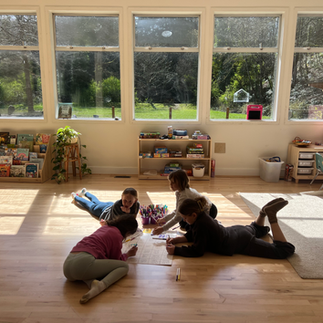
The focus of this first week back was to settle back into our regular routines, and also to introduce our very first studio-wide challenge! These challenges are a big part of Acton culture - an opportunity for children to participate by choice, push themselves beyond their comfort zone, and be rewarded for their perseverance and grit. For this first challenge the subject was math - specifically a set number of pages in their Math Mammoth (off-screen) math books. I chose this intentionally. Of all the learning materials in studio, these math workbooks seem to be the ones resisted by the majority of our learners. I was curious to see what would happen when these young people were challenged to approach something they'd been avoiding or resisting, and how they may feel about math (or more importantly, challenging work) afterwards.

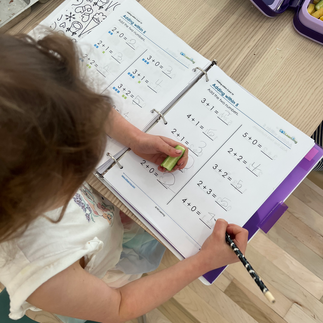


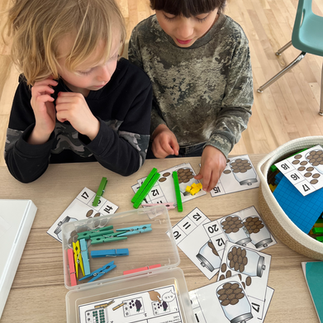




The rules were simple. Complete "x" number of pages in your book every day this week. Have your work checked for excellence by a guide or peer, and if deemed complete, add a sticker by your name for that day's work. If by the end of the week you've completed the challenge each day with excellence, you get ice cream on Friday!
The intention behind these challenges has actually very little to do with the academic subject at hand. Much more important than any academic learning that happens during the week is the deep learning that happens when a person either succeeds or fails in this pursuit. Should they persevere through this thing they may have previously been resisting, they learn they are capable of more than they realized. They also learn they are rewarded when they apply themselves to something that's hard. It's icing on the cake if in this process they actually find joy in the subject, and from what I observed, this was definitely the case for the children who applied themselves in this challenge. In some instances, despite having completed the required number of pages for the day, some of them were insisting on continuing with more, as they were finding so much joy in their work. This, coming from children who had not picked up their math book in months. Sometimes it takes an extrinsic motivating factor to approach work that then becomes intrinsically rewarding.
Equally as important and impactful is the deep learning that comes through failure. If a child is allowed to fail in this pursuit - which was intentionally structured to be challenging but not impossible - they will benefit from this experience as well. If anyone did not succeed in this challenge, it would have been for one reason - that they did not apply themselves. This is what we mean when we talk about "failing cheaply, early, and often" in Acton. Although a very painful lesson to learn - it's no fun watching your friends eat ice cream while you can't - the cheap fail is actually learning this hard-lived lesson when you're eight, not when you're 25. That slacking off or taking the easy road while others work hard has negative consequences for you. Imagine the difference - sailing through your early twenties, taking easy low-skill jobs, living in your parent's basement, eating their food, as little personal responsibility as possible, etc. Then waking up one morning and realizing your friends have started companies, joined a trade, pursued a post-secondary education, are now buying their own cars and homes, etc. and that you have no one to blame but yourself. That is what we mean by a "cheap fail".


I reflected a lot on this challenge over the weekend. Although in many ways it was a success - it injected enthusiasm and energy into our math work and introduced our young studio to the format and concept of these Acton challenges - I do feel I failed in many ways as their guide. Despite all my lovely words above, actually living by them and allowing children to fail is incredibly hard. This past week I was guilty of stepping in when I should have stepped back; helping children who were moaning and groaning through the challenge, dilly dallying and not doing their work. Instead of allowing this to happen I was constantly stepping in with these young people, reminding them of what was at stake, that they had math work to complete, holding their hand through much of the process. This is not the role of a guide. In doing so I robbed them of what I do believe would have been a failure, and all the benefits and deep learning they would have gained. I also robbed the other children, those who buckled down and did their work without complaint or protest, from the powerful experience of being rewarded for their efforts while those around them who resisted and slacked off were faced with the consequences of their decision. My commitment to these heroes and to our community is that I won't make that mistake again. I truly believe that each and every one of these children are capable of so much more than we realize, and I will show them that by holding them capable.
In the wise words of Henry Ford, what I hope to embody and what I hope these heroes will learn as they grapple with inevitable failures along their own Hero's Journey, “The only real mistake is the one from which we learn nothing.”


Comments